Truly Effective Backlink Strategies for AI
Backlinks in the Age of AI: What Shape They Take and Their Order of Importance
The complete 2026 guide to every backlink type, how AI has rewritten the hierarchy, and what the top 1% of SEOs know that everyone else is still catching up to.
What You’ll Find in This Article
- Why backlinks remain the #1 off-page ranking signal – and how AI has redefined what “quality” means in 2026
- The complete taxonomy – 12 distinct backlink types, from editorial gold to active liability
- The definitive order of importance – a tiered hierarchy backed by surveys of 500+ SEO professionals and analysis of 1 million AI citations
- The seismic AI shift – why brand mentions now outperform traditional links 3:1 for AI visibility
- Digital PR: the consensus #1 strategy in 2026 and exactly how it creates four compounding outcomes from one campaign
- The anchor text distribution formula that keeps you safe from algorithmic penalties
- Little-Known Gems – five non-obvious insights the top 1% of SEOs know that most practitioners have never considered
- The five mistakes that destroy rankings – and how to avoid every one
The Bridge Builder and the Mapmaker
In the age before highways, there was a mapmaker who spent his life charting the territories between cities. He worked alone, carefully noting every road, every bridge, every well-worn path that travelers had carved into the earth. Other mapmakers drew landscapes. This man drew connections.
When travelers consulted his maps, they not only saw the towns. They saw which towns were connected to other towns – and by how many roads, and by roads of what quality. A city with one rickety wooden bridge in and out was noted very differently from a city where six stone trade roads converged from every direction.
One day, a young apprentice asked him why he spent so much time measuring connections rather than simply drawing the towns themselves. The mapmaker looked up and said, “The town itself tells me nothing. The roads that lead to it tell me everything. A city that the whole world chooses to connect to – that city is worth visiting. A city that no road leads to – that city, however beautiful, remains invisible and forgotten.”
In the digital world of 2026, backlinks are the roads. Your website is the city. And the mapmakers – Claude, ChatGPT, Perplexity, Gemini – are still asking the same ancient question: how many roads lead here, who built them, and do they come from places worth trusting? The answer to that question now determines not just where you rank in search results, but whether AI systems include your brand in the answers they generate for the buyers you are trying to reach.
What a Backlink Really Is – And Why the Definition Is Expanding
A backlink is a hyperlink from one website to another. When Website A includes a clickable link pointing to Website B, Website B earns a backlink. At its most fundamental level, every backlink is a third-party act of endorsement: one publisher choosing to send their audience to your content.
Google’s original PageRank algorithm – still the backbone of its ranking system in 2026 – was built on this simple premise: a page that earns many links from many trusted sources is more likely to be authoritative, accurate, and worth surfacing than a page with few links. Twenty-five years later, that core logic holds. Google’s link evaluation is far more selective now. The strongest links aren’t just high-authority; they’re topically aligned, editorially placed, and naturally earned. What has changed beyond recognition is what “quality” means, what “trusted” means, and how AI systems evaluate the same signals.
In 2026, the definition of a backlink is actively expanding. Unlinked brand mentions – where your brand name is cited without any hyperlink – now register as proto-backlinks with AI systems and increasingly with Google itself. Co-citation patterns – being mentioned alongside established authorities – send entity-association signals that compound over time. The hyperlink is still king, but the kingdom has grown to include the entire mention ecosystem. MMG’s comprehensive marketing plan framework now treats both linked and unlinked brand mentions as measurable, strategic assets.
CONFIRMED: Backlinks still hold a top-three spot among all ranking signals. Yes, backlinks matter for AI Overviews and AI search visibility in 2026. AI systems pull answers from sources they trust, and link authority remains a core trust signal. Sites with strong backlink profiles appear in AI-generated answers more often – creating a compounding effect where a strong link profile lifts classic rankings and AI citations simultaneously. However, Google’s reliance on raw backlink count dropped from 15% to 13% of algorithm weight between 2023 and 2025 – while quality standards rose dramatically.

In the Age of AI
You Gain the Advantage over Those Who Don't Step Up
The Complete Taxonomy: 12 Backlink Types and What Each One Is Worth
Not all backlinks are created equal. Understanding the taxonomy is not an academic exercise – it is the difference between building an authority machine and building a liability. Here are all twelve forms backlinks take in 2026, organized by strategic value tier.
TIER 1 – Maximum Value (Pursue Aggressively)
TIER 2 – High Value (Strategic Deployment)
TIER 3 – Supporting Value (Don’t Ignore)
TIER 4 – Active Liability (Avoid Entirely)
The Order of Importance: The 2026 Priority Matrix
| TIER | TYPE | WEIGHT | AI CITATION POWER | WHY IT LEADS |
|---|---|---|---|---|
| 1 | Editorial + Digital PR | ★★★★★ | 🔥 Maximum | 84% of AI citations. Feeds PageRank AND entity signals simultaneously |
| 1 | HARO / Expert Citations | ★★★★★ | 🔥 Maximum | Journalist-earned links from DR 60–90+ at volume |
| 2 | Visual / Data Asset Links | ★★★★☆ | 🟠 Strong | 555% more links than text. Passive. Compounds indefinitely |
| 2 | Quality Guest Posts (DR 50+) | ★★★★☆ | 🟠 Strong | Effective at quality. Worthless on content mills |
| 2 | Broken Link Replacements | ★★★☆☆ | 🟡 Moderate | True editorial intent. High acceptance rates |
| 3 | Niche Edits | ★★★☆☆ | 🟡 Moderate | Fast authority transfer. Quality-dependent |
| 3 | Resource Page Links | ★★★☆☆ | 🟡 Moderate | Consistent referral + authority for guides and tools |
| 3 | Community Links (Reddit) | ★★★☆☆ | 🔥 Maximum for AI | Nofollow — but 52.5% of all AI citations |
| 4 | Nofollow / Publication Mentions | ★★☆☆☆ | 🟡 Moderate | Indirect ranking lift + brand signals |
| 4 | Unlinked Brand Mentions | ★★☆☆☆ | 🔥 Strong for AI | 0.664 vs 0.218 — most underused signal in most strategies |
| 4 | Directory / NAP Citations | ★☆☆☆☆ | 🔵 Local Only | Foundational baseline. Required but low ceiling |
| AVOID | PBN / Link Farms / AI Sites | ☠️ | ❌ Zero | Manual penalty risk. Google spam systems catch patterns |
The Seismic AI Shift: What Changed in 2025–2026
Here is the data point that should stop every SEO professional and business owner in their tracks: Branded web mentions carry a 0.664 correlation with AI Overview visibility, while total backlinks sit at just 0.218. AI models prioritize entity recognition over link-based authority, so a business with consistent brand mentions across the web gets cited far more often than one with a large backlink profile but no brand footprint. That is a 3:1 advantage for brand mentions over traditional backlinks in the metric that now governs where millions of high-intent buyers find their answers.
AI systems like ChatGPT, Perplexity, and Google AI Overviews (Gemini) evaluate your brand the way the internet’s collective judgment values it – through entity recognition, mention patterns, consistent topical association, and editorial credibility. A site with moderate backlinks but dense, authoritative brand mention coverage outperforms a site with a massive backlink profile but thin brand presence in AI-generated answers. The old rulebook rewarded link volume. The new rulebook rewards brand legitimacy at internet scale.
Only about 17% of AI Overview citations come from pages ranking in the organic top 10 – ranking no longer guarantees AI visibility. Digital PR closes that gap. Earned media accounts for 84% of all AI citations, while paid and advertorial content is just 0.3% – AI overwhelmingly trusts editorial coverage. Ranking and AI visibility have decoupled. Winning traditional SEO no longer guarantees winning AI search. The businesses that understand this are building strategies that serve both systems – and the intersection of both is earned editorial coverage.
An AI visibility audit of your current digital footprint is the essential first step in understanding where you stand across both traditional search and AI citation ecosystems. And understanding which AI crawlers are indexing your content in 2026 ensures your link-earning content is actually being surfaced by the systems that matter.
LITTLE-KNOWN GEM: Community platforms captured 52.5% of citations across ChatGPT, Perplexity, and Google AI Overviews in OtterlyAI’s 2026 study of one million citations. Reddit is nofollow. Quora is nofollow. Yet these platforms drive the majority of what AI cites. If you’re ignoring community presence in your link strategy, you are ignoring the channel that AI trusts most.
The 4 Dimensions of What Makes a Backlink High-Value
Dimension 1: Topical Relevance. Context beats the href tag. A link from a DR 40 niche publication directly covering your topic now frequently outperforms a link from a DR 80 general publication in an unrelated space. Google’s AI systems read the content surrounding your link, the topical neighborhood of the linking domain, and the semantic relationship between the linking page and the destination. A link from a site that covers the same subject area reinforces that your page belongs in that conversation. That topical reinforcement helps search engines connect your content to the right queries and also helps AI systems choose sources more confidently. Your online content strategy must be built to attract links from topically adjacent sources.
Dimension 2: Editorial Authority. Does the linking site have genuine organic traffic, consistent publication standards, and links from other trusted sources? 91% of SEOs set a minimum DR before placing links; 52% require DR 50+, 22% require DR 60+. An editorial link from a DR 70 publication is the gold standard. Domain Rating is a useful proxy – but it is not sufficient without topical alignment and genuine audience engagement.
Dimension 3: Link Placement. A link embedded in the body of a well-written, topically relevant article is worth dramatically more than the same link in a footer, sidebar, or generic directory listing. Links should appear naturally within contextually relevant content. A backlink embedded in a paragraph discussing your specific topic signals genuine editorial endorsement, while a footer link suggests paid placement or link exchange. The surrounding content provides context. A link inside a substantive paragraph passes more authority – and more AI citation value – than a link buried at the bottom of a page.
Dimension 4: Anchor Text Diversity. The natural distribution that keeps your profile authentic to Google’s spam detection: 40–50% branded anchors (“Your Company Name”), 20–30% generic (“click here,” “learn more”), 15–25% partial-match (“marketing automation agency”), and 5–10% exact-match (“best marketing automation benefits”). Over-optimization of exact-match anchors is one of the fastest ways to trigger algorithmic penalties. AI systems also evaluate natural language flow around links – keyword-stuffed anchor text signals manipulation to both Google and AI ranking models simultaneously.
The Digital PR Playbook: The #1 Strategy in 2026
Digital PR is the consensus most effective link-building strategy in 2026, rated #1 by 48.6% of 518 surveyed SEO experts (Aira/Editorial.link survey). And the AI citation data behind it is extraordinary: distributing content across publications increases AI citations by up to 325% versus publishing only on your own site. That is not a marginal improvement — it is a structural advantage that compounds across every subsequent piece of content you publish.
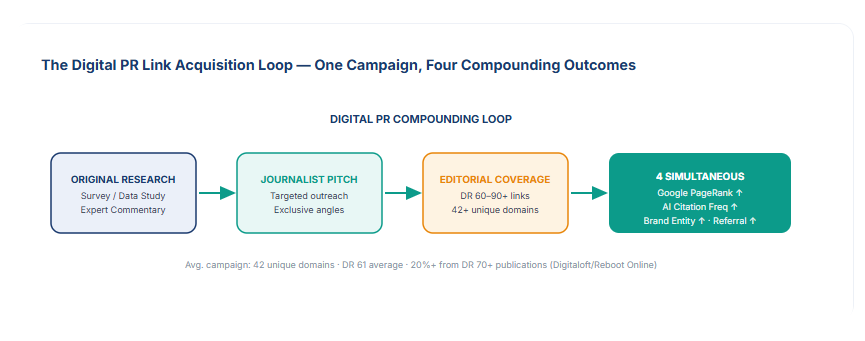
Digital PR earns editorial links from news sites, trade publications, and industry media – the exact categories of sources that AI systems are most heavily trained on. ChatGPT, Perplexity, and Gemini specifically draw from TechCrunch, Forbes, Harvard Business Review, and trade publications. Appearing in those outlets doesn’t just help your Google rankings – it trains AI systems to cite your brand as an authoritative source the next time a high-intent buyer asks a question you own.
The Digital PR formula:
(1) Conduct original research or surveys that produce genuinely shareable data.
(2) Package findings into compelling story angles for different media outlets.
(3) Pitch journalists with personalized outreach offering something their readers cannot find elsewhere.
(4) Distribute coverage across your own channels to amplify reach and generate secondary mentions.
One campaign earns 42+ unique domain links at DR 61 average — while simultaneously contributing to brand entity signals, referral traffic, and AI citation probability. This is why MMG’s comprehensive marketing plans now treat Digital PR as core infrastructure, not an optional campaign.
The Mistakes That Destroy Rankings in 2026
Mistake 1: Buying PBN Links or Link Farm Packages. Private Blog Networks and link farms carry manual penalty risk. Google’s spam detection catches unnatural patterns at scale – domain registration, hosting, content similarity, link velocity – and a single manual action can remove years of ranking work overnight. AI-generated link sites provide zero AI citation value and increase Google penalty risk. They are the only link investment with a guaranteed negative return.
Mistake 2: Over-Optimized Exact-Match Anchor Text. If every link pointing to your “marketing automation” page uses the anchor “marketing automation,” you’ve manufactured a fingerprint Google’s algorithms flag as manipulation – even when your links come from legitimate sources. AI citation systems also evaluate natural language flow around links; keyword-stuffed anchor text signals manipulation to both traditional and AI ranking systems. Follow the 40/25/20/10 distribution formula.
Mistake 3: Ignoring Link Decay. 66.5% of hyperlinks rot naturally over time – pages disappear, sites restructure, content gets deleted. A link-building program without regular auditing is burning money: your existing asset erodes while you build new links without compensating for losses. Regular link audits are revenue protection. Your web development infrastructure should include regular monitoring of inbound link health.
Mistake 4: Treating Link Building as Separate from Content. The most fundamental mistake: treating link building and content creation as separate workstreams. The most durable, highest-value links in 2026 are earned by content so genuinely useful – original data, comprehensive guides, embeddable visuals — that other publishers reference them without being asked. Content and links are not two strategies. They are one strategy executed at different stages.
Mistake 5: Ignoring Brand Mentions and Community Presence. Many organizations still build link profiles without tracking unlinked brand mentions or community platform presence. Branded web mentions have a correlation score of 0.664 with AI Overview appearances – far higher than backlinks alone at 0.218. In 2026, your mention profile matters as much as your link profile. Not monitoring and pursuing your brand’s mention footprint is leaving the highest-correlation AI visibility signal completely unattended.
Little-Known Gems: What the Top 1% of SEOs Know That Others Don’t
Gem 1: Co-Citation Is a Ranking Signal Without a Link.
Co-citation means being mentioned in the same article, page, or context as established authorities – even when no hyperlink exists. If a Forbes article mentions your brand alongside HubSpot and Salesforce in a discussion of marketing automation, Google’s entity recognition systems associate your brand with theirs. Dense co-citation patterns build topical authority signals that rival traditional backlinks. The practical implication: content marketing, community engagement, and PR efforts that generate brand discussion – not just links – compound into AI visibility over time. Most SEOs have never measured this. The ones who have are building the most AI-resistant authority profiles on the web.
Gem 2: Wikipedia Proximity Links – The Hidden Power Tier.
Wikipedia itself will never link to your commercial site in a way that passes authority. But “Wikipedia proximity” links – from pages linked to by Wikipedia, or from academic and research pages that mirror Wikipedia’s editorial standards – pass authority disproportionate to what most prospecting tools suggest. These pages carry deep proximity-to-authority signals that AI systems weigh heavily because they are embedded in the web’s most trusted content fabric. Most link prospecting ignores these entirely – which is precisely why they represent a significant competitive gap.
Gem 3: Reddit Is the Most Underrated Backlink in AI Search.
Reddit links are nofollow. They pass zero PageRank. By every traditional SEO metric, they are worthless. Yet community platforms, including Reddit, captured 52.5% of citations across ChatGPT, Perplexity, and Google AI Overviews in a study of one million AI citations. AI models were trained on the internet – and the internet is heavily Reddit and community content. A brand that earns genuine community discussion on Reddit is a brand that AI systems include in their answers, regardless of whether a hyperlink exists.
Gem 4: Link Velocity Matters as Much as Link Volume.
A sudden spike of 200 links in one month after zero link activity is one of the clearest spam flags Google detects. Most top-ranking pages gain between 5% and 14% more followed links each month, according to Ahrefs data. Natural link profiles grow steadily from diverse source types, domains, and geographic origins. Link velocity is the timing dimension of link building that almost every beginner ignores and every expert obsesses over. Plan your acquisition calendar around a steady, defensible growth curve. Search Engine Land
Gem 5: The Linkable Asset Strategy Compounds Indefinitely.
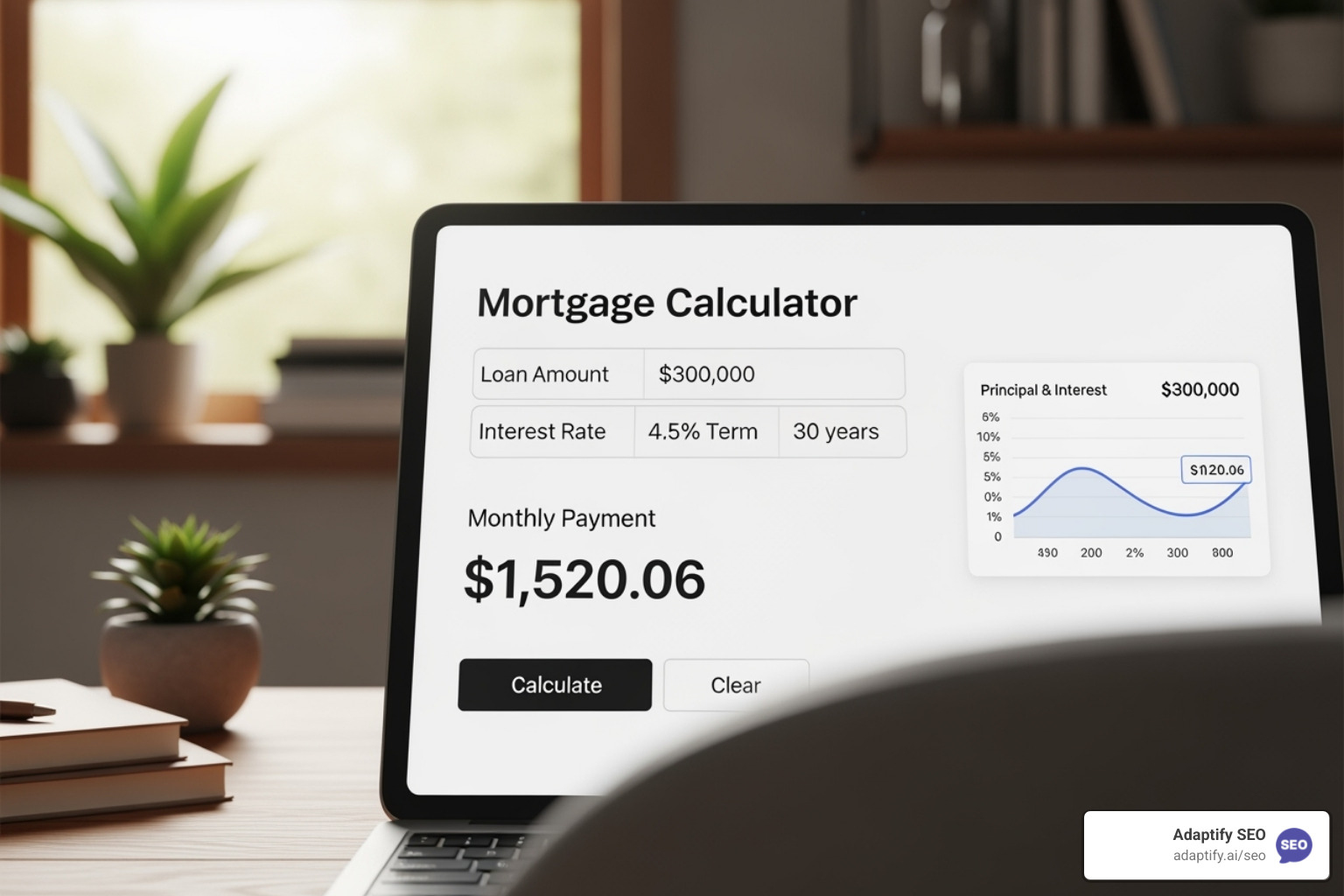
A linkable asset – a definitive industry dataset, original research study, comprehensive calculator, or embeddable comparison chart – earns links passively, every month, potentially for years, without outreach effort. The ROI is extraordinary: one piece of linkable asset content, created once, can generate more compounding link authority than 12 months of manual outreach to the same link pool. Backlinko’s own statistics page obtained 36 backlinks from 32 referring sites, with editorial citations acting as the core driving force — zero outreach required. The asset was the strategy. Explore MMG’s full AI strategy and SEO article library to see this approach applied consistently at scale.
Bottom Line: The Bridge Is Made of Choices – and the Builders Are Watching
Every day, editors, journalists, researchers, bloggers, and community members around the internet are making choices about what to link to. They are choosing the content that helped them most. The data that surprised them most. The brand they trust most. They are building roads to the cities worth visiting – and no amount of manufactured roads will fool the mapmakers for long.
In the Age of AI, those choices now feed two audiences simultaneously: the human reader who follows the link and the AI system that catalogs the endorsement as evidence of authority. A link earned from a respected publication trains Google to rank you higher AND trains ChatGPT to cite you when someone asks for the best answer to a question you own. These are no longer separate games. They are the same game, played on the same field, with the same fundamental currency: genuine, third-party, earned trust.
The hierarchy is clear. Editorial and digital PR links sit at the top.
Community signals and brand mentions carry weight that no traditional link audit has ever measured. Anchor text diversity protects what you build. Link decay audits preserve what you’ve earned. And the content – always the content – is the soil every link grows from.
The businesses that understand this in 2026 are building something competitors cannot buy: a compounding web of authority across both traditional search and the AI systems that are increasingly where buyers go to find what they need.
Stop chasing metrics that expired in 2018. Start building the kind of authority that 2026 rewards
– the kind that earns links while you sleep, earns AI citations while your team is in morning standup, and earns the trust of the mapmakers who decide which cities are worth visiting.
MediaBus Marketing Group has spent over 25 years building authority architectures for businesses that refuse to be ordinary. We understand backlink strategy across both traditional SEO and AI citation ecosystems – and we build both simultaneously.
📞 CONTACT US TODAY
Your authority architecture starts with a single audit – and that audit is worth more than every mediocre link you’ve ever built. The bridge is waiting to be built. The road begins here.
AI-Focused Backlinks FAQs
Q1: Do backlinks still matter in 2026, or has AI made them obsolete?
Backlinks remain a top-3 Google ranking factor in 2026 – this is not in dispute. Multiple independent studies confirm a strong correlation between link authority and rankings, and 94% of SEO professionals believe links will still be a ranking factor in five years. What has changed is the definition of quality and the emergence of parallel signals that AI systems weigh alongside traditional links. Brand mentions now carry a 0.664 correlation with AI Overview visibility versus 0.218 for traditional backlinks. AI hasn’t made backlinks obsolete; it has expanded the universe of authority signals, made high-quality links far more valuable relative to low-quality ones, and added a second channel (AI citation frequency) that the best backlinks now serve simultaneously. The businesses ignoring this dual mandate are fighting with half their arsenal.
Q2: What is the single best backlink strategy for a business in 2026?
The research is unambiguous: Digital PR is the consensus #1 strategy, rated most effective by 48.6% of surveyed SEO professionals. Digital PR earns editorial links from news and media outlets that simultaneously serve Google’s PageRank system AND the AI training data that determines citation frequency. A well-executed digital PR campaign earns 42+ unique domain links at a DR 61 average – and earned media accounts for 84% of all AI citations. Distributing content across publications increases AI citations by up to 325% versus publishing only on your own site. The compounding effect is unmatched: every piece of earned editorial coverage builds link authority, brand entity signals, and AI citation probability in a single action.
Q3: Are nofollow links worth pursuing in 2026?
Yes – strategically and deliberately. A healthy link profile includes 30–40% nofollow links. Pursuing only dofollow links creates an unnatural pattern that triggers spam detection. More importantly, community platform links – Reddit, Quora, industry forums – are almost universally nofollow yet account for 52.5% of citations across major AI systems. And nofollow links from high-authority publications drive qualified referral traffic, build brand visibility, and contribute to the brand signal ecosystem that has a 0.664 correlation with AI visibility. The smart operators pursue nofollow links from community platforms and major publications specifically because of their AI citation value, independent of PageRank contribution.
Q4: How do you build links without paying for them?
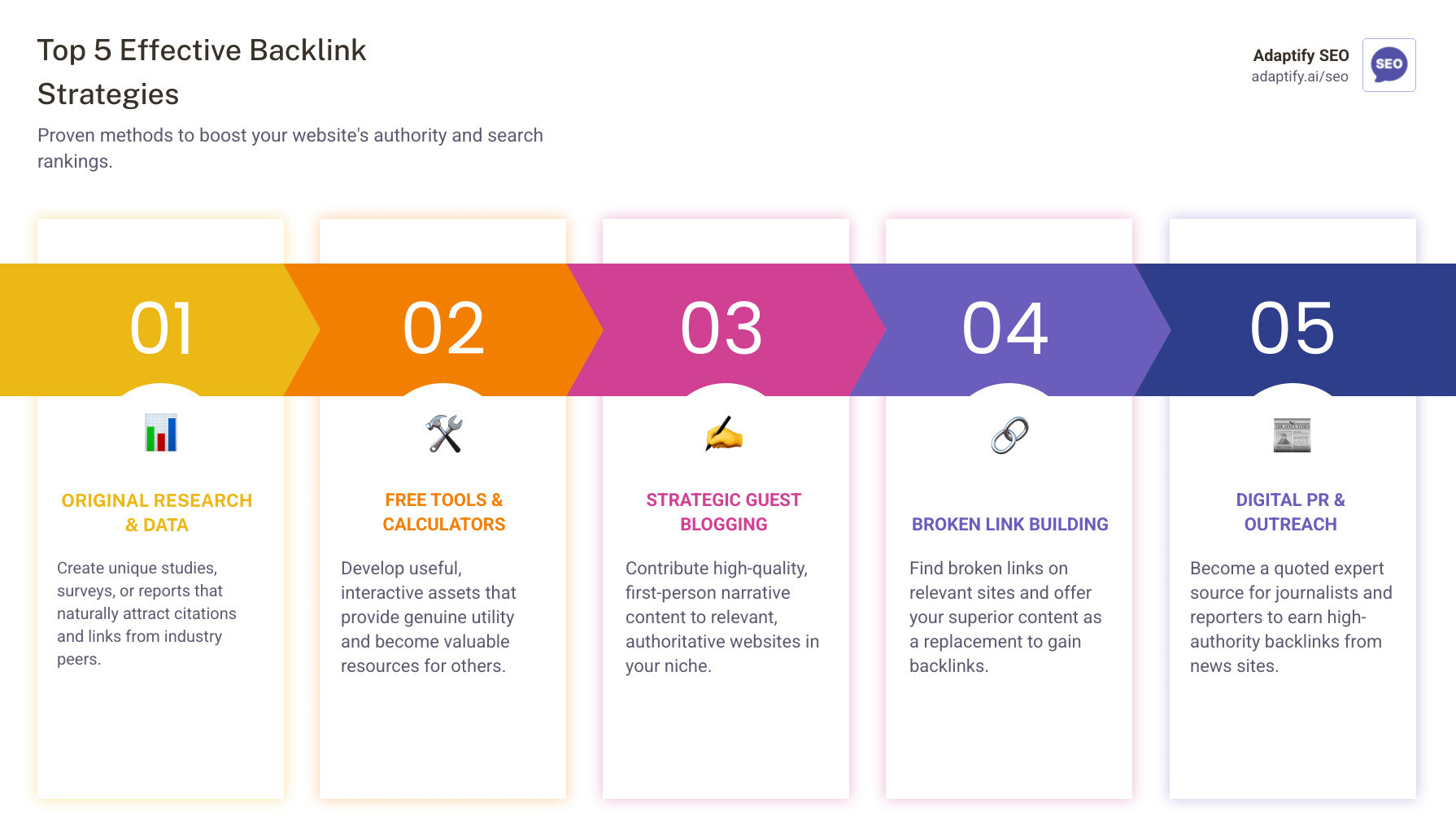
The four most effective earned link-building strategies in 2026: (1) Original data and research – conduct surveys, compile industry data, and analyze proprietary information into shareable findings that other writers need to cite; (2) Linkable assets – create tools, calculators, templates, or comprehensive guides so useful that other publishers reference them without prompting. Original visual content earns 555% more links than text-only content; (3) Digital PR outreach – pitch original angles, expert commentary, and exclusive data to journalists at targeted publications; and (4) Broken link building – identify dead links on high-authority pages in your niche, create better replacement content, notify the webmaster. All four strategies earn genuine editorial endorsement — the exact signal both Google and AI systems are trained to reward.
Q5: How long does it take for a new backlink to improve rankings and AI visibility?
Most practitioners report measurable ranking movement 6–12 weeks after a quality link is indexed. AI citation visibility operates on a different timeline: AI models are retrained on periodic data snapshots rather than real-time crawls, so new citation visibility can lag 3–6 months behind improved search rankings. This is why link building must be treated as an infrastructure investment rather than a tactical campaign – the compounding effect builds over months, not days. The businesses with the strongest authority profiles in 2026 didn’t start building six months ago. They started years ago and never stopped. The best time to start was then. The second-best time is now.
Action Items:
SHARE THIS STORY ANYWHERE YOU LIKE
SHARE THIS STORY ANYWHERE

How Can AI Help Us Capture More Business and Handle More Work Without Immediately Hiring More People?
How Can AI Help Us Capture More Business and Handle More Work Without Immediately Hiring More People? The [...]

Setting Realistic Goals for AI Implementation
Setting Realistic Goals for AI Implementation The SMART Framework, the Achievability Trap, and Two Verified Real-World Examples of [...]
What KPIs Should I Actually Track?
What AI KPIs Should I Actually Track? The 6-Metric Framework That Separates Proof from Guesswork What You'll Find [...]
REWRITE ALL THIS
- Quality beats quantity – One high-authority link is worth more than hundreds of low-quality ones.
- Context is king – Links from topically-aligned sites carry more weight.
- AI changes everything – AI search now evaluates brand mentions and co-citations, not just links.
- Content-led approaches win – Linkable assets like research and tools attract links naturally.
- Strategic outreach still works – Modern guest blogging, broken link building, and digital PR deliver results.
href link to co-citationswhen your brand is mentioned alongside authoritative sources, even without a link. This builds “contextual authority,” establishing you as a relevant voice in your industry.| Characteristic | High-Quality Backlink | Low-Quality Backlink |
|---|---|---|
| Source Authority | From reputable, industry-leading websites (e.g., Forbes, .edu, .gov) | From spammy, irrelevant, or low-authority sites (e.g., PBNs, comment spam) |
| Relevance | Content is highly related to your niche/topic, adds value to the reader | Content is unrelated or tangentially related, provides little value |
| Placement | Naturally embedded within the main body of relevant content, contextual | In footers, sidebars, author bios (without context), or clearly sponsored sections |
| Anchor Text | Natural, varied, descriptive, not overly optimized for keywords | Exact-match keyword heavy, unnatural, clearly manipulative |
| DoFollow Status | Predominantly dofollow, but a natural mix of nofollow is also healthy | Exclusively dofollow from suspicious sources |
| Traffic/Engagement | From pages that receive organic traffic and user engagement | From pages with no traffic or artificial engagement |
| Acquisition Method | Earned through valuable content, relationships, or ethical outreach | Purchased, exchanged in bulk, or generated through automated tools |
| Impact on SEO | Significantly boosts rankings, authority, and organic traffic | Can lead to Google penalties, deindexing, and reputation damage |

- Integration Partners: If you’re a SaaS company, get featured on your partners’ integration pages. Companies like Zapier have built entire ecosystems around this, creating natural linking opportunities.
- Co-Marketing: Partner with complementary businesses on joint webinars, e-books, or research. Each partner promotes the content, linking back to the others’ sites.
- Affiliate Programs: A well-structured affiliate program incentivizes creators to build detailed content about your brand, like reviews and tutorials. As Ramit Sethi notes, this is a powerful lever for building relevance. This content seeds LLM training data and increases brand association across the web.