

7 Powerful Truths You Must Know
The world of the digital is EXPONENTIALLY advancing, and very few know it, or know how to navigate through it, or worse yet, how they can take advantage of what is here and now. We must know that the Age of Generative AI is coming quickly to a close, and the dawn of AGI (Artificial General Intelligence) is cracking over the horizon.
I often describe the next major evolution of AI as likened unto the Star Trek Computer (voiced by the lovely and now deceased Majel Barrett-Roddenberry). That it will enhance our capabilities to the point where we will be able to achieve many things, quickly on a daily basis.
Let’s get more in-depth on that and start at the beginning here
Introduction to AGI
What is AGI, and how will it affect me? That question is no longer a subject of Star Trek science fiction. It’s becoming one of the most important questions of the 21st century. And more importantly, what we are facing this next year.
Artificial General Intelligence, often called AGI, refers to a form of AI that can understand, learn, and apply knowledge across a wide range of tasks—just like a human. Unlike today’s AI tools that specialize in specific tasks, AGI would think, reason, and adapt across domains without needing retraining for each new job.
In recent years, AI systems like ChatGPT, image generators, and autonomous software agents have advanced rapidly. The widespread advancement of coding via OpenAI’s Codex as well as the Claude Codex have since January of 2026 advanced access and expertise of writing code itself to the masses. These breakthroughs make many people wonder whether AGI is closer than we think. And I am one of them!
And here’s the real issue: if AGI becomes reality, it won’t just change technology—it could reshape work, education, healthcare, business, and daily life.
So let’s break it down clearly, simply, and honestly.
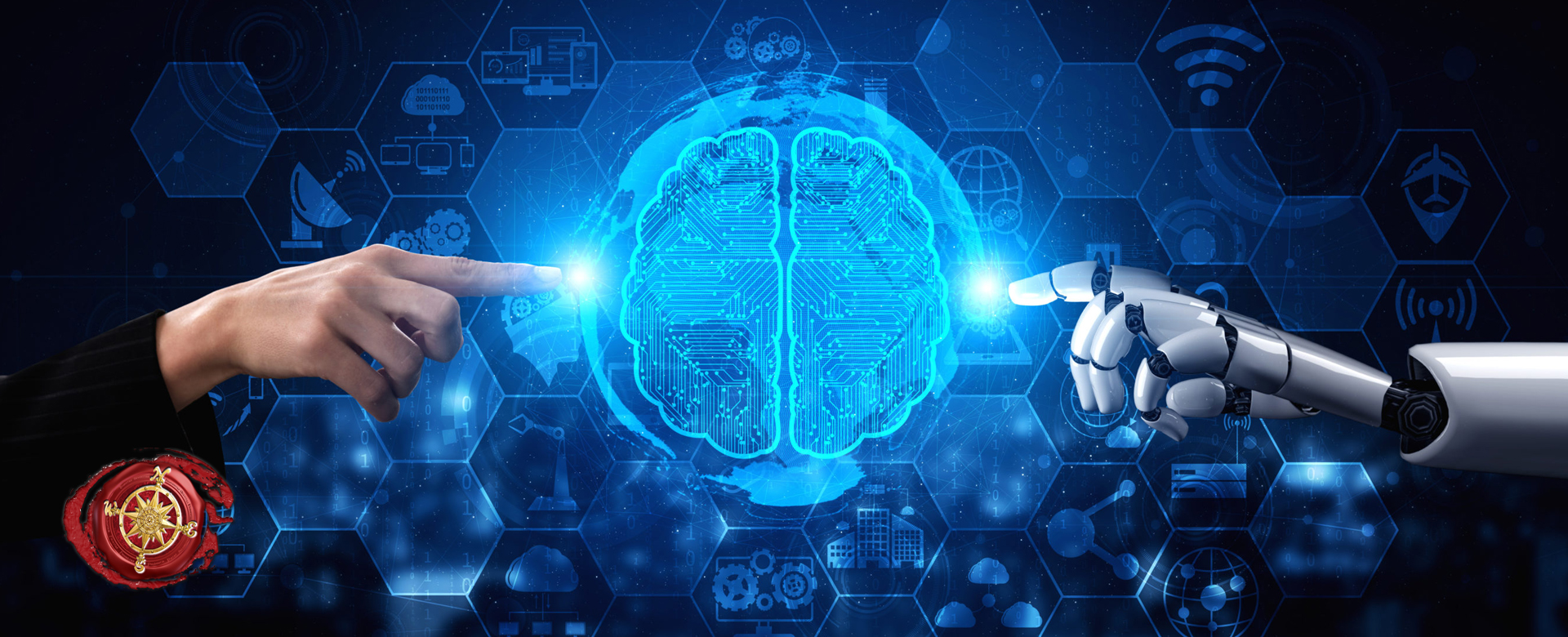
Faces of AGI Futures
Let's step into the realm of AGI realities
What Is Artificial Intelligence (AGI)?
Artificial General Intelligence is machine intelligence that can perform any intellectual task a human can. In the manner the human brain can do it, with the efficiency of a computer and the lack of errors in the tasks undertaken. It wouldn’t just follow instructions. It would reason, solve problems, learn from experience, and transfer knowledge between fields. Let’s let that sink in a bit… tasks done precisely, accurately, and thoroughly WITHOUT the human errors that creep in. And this isn’t just about writing code… It can be applied to many different industries, jobs, tasks, and ‘to-do’ items.
AGI, on the other hand, would:
-
Learn new tasks without retraining
-
Apply knowledge from one field to another
-
Adapt independently to unfamiliar situations
-
Potentially demonstrate creativity and abstract thinking
That’s a big leap. That is a “One Giant Leap for Mankind” on the Moon kind of leap.
Why AGI Matters Now
The conversation around AGI is heating up because AI capabilities are improving quickly. According to leading research organizations like OpenAI (https://openai.com/research), breakthroughs in machine learning are accelerating.
While no one knows exactly when AGI will arrive, many experts believe it could happen within decades—or even sooner.
And that’s why people are asking: What is AGI and how will it affect me personally?
The Evolution of Artificial Intelligence
To understand AGI, we need to see how AI evolved. What most people are familiar with and from which people have been using to ask questions.
From Rule-Based Systems to Deep Learning
Early AI systems were rule-based. Engineers wrote specific “if-then” instructions. These systems were rigid and limited. They are good guessers, given the word usage utilized previously, what the next word should be used afterward. They recognize patterns like no other creation before it, except the Human Brain.
Then came machine learning. Instead of programming rules manually, developers trained models using large datasets. Deep learning models, powered by neural networks, could recognize patterns in images, language, and speech.
This shift led to:
-
Voice assistants
-
Self-driving prototypes
-
Medical imaging analysis
-
Generative AI tools
But still, these systems remain narrow, as we have known them.
The Big Leap Toward General Intelligence
AGI would represent a fundamental shift. Instead of being trained for one task, it would build internal models of the world. It could reason about physics, language, emotions, business strategy, and biology—without needing separate systems for each.
That’s why AGI isn’t just “better AI.” It’s a different category altogether.
And when people ask, what is AGI and how will it affect me, they’re really asking how this leap might impact human society.
How Will AGI Affect Jobs and Careers?
This is where things get personal. As the invention of the telephone and the spreading of it displaced morse code operators; as the invention and adoption of the automobile, severely curtailed the need for anything related to horses… from stables, tack, buggies… the jobs that surrounded that once vital service and commodity were supplanted with the garage, equipment and cars that followed and the jobs that sprung up as a result.
That is the same here, EXCEPT, it is not happening over the course of many years, it is happening in mere months, yeah, maybe in some respects in days.
For example, the Industry of Marketing. Just five years ago, we had been performing the tasks needed as had been established by the advent of the Internet. Paid Advertisements, and working from a gut feeling most of the time. Now, AI has completely taken over to the point that those who are coming into the profession now cannot fathom how all this was done without the measurements, monitoring, and research that can be done with AI.
The Jobs which are at Risk
Right now, as it stands today at the time of this writing, AGI could automate not just manual labor but also the cognitive tasks of:
-
Data analysis
-
Legal research
-
Accounting
-
Software development
-
Customer service
-
Content creation
Items, Agents, Apps from Grok, Claude, Gemini, and ChatGPT in the first month of 2026 have all made those jobs, and those jobs surrounding those redundant.
If AGI can reason across fields, it could outperform humans in many knowledge-based jobs.
However, history shows that technology doesn’t just eliminate jobs—it transforms them.
Jobs That Will Thrive
New roles are emerging:
-
AI alignment specialists
-
Human-AI collaboration designers
-
Ethics and governance professionals
-
Advanced robotics technicians
-
Creative strategists
Let’s take an example. Walking along the train tracks, and you can see that a train in the distance is coming your way… do you stay on the railing and let it hit you? Also, if you see that proverbial train coming up behind you, going in the direction you want to go, would it be a smart thing to stop and let it go by, or would your brain be working on how you could get up to speed and get on that train?
Humans may shift from doing repetitive tasks to managing, guiding, and collaborating with intelligent systems.
Skills You Should Build Now
Young people ask me often, “I just graduated from college, what should I do?” Here’s how I answer.
To stay ahead:
-
Learn adaptability
-
Develop emotional intelligence
-
Strengthen creative thinking
-
Understand AI fundamentals
-
Build leadership skills
This educational system (which is worthy of its own article here) and how it is failing today’s younger people for being automotons and drones, rather than what they need in figuring out systems, Patterns Recognition, Emotional Intelligence, and Mental Resilience. This is what is needed with today’s job force and earning structures.
In a world shaped by AGI, uniquely human traits become more valuable, point blank!
How AGI Could Change Everyday Life
The impact from all of this won’t stop at workplaces. It will bleed into everyday tasks and occurrences.
Smart Homes and Personal Assistants
Imagine a personal assistant that truly understands you. It anticipates needs, plans your schedule, negotiates bills, and optimizes your finances—all autonomously. Imagine not only the ability to have one, but to keep it secure and encrypted from those who would use it nefariously against you.
Healthcare and Medicine
AGI could, according to your DNA profile and Genetic Makeup:
-
Diagnose complex diseases
-
Design personalized treatments
-
Accelerate drug discovery
-
Predict outbreaks
Healthcare might become faster, cheaper, and more precise, more personal, and more life-changing.
Education and Learning
Schools as they are now constituted are made obsolete. You do not need to pay any institution any ungodly amount of money to gain the skills that will assist you in creating the world around you that you want to have. Students could have personalized tutors available 24/7. Lessons would adapt in real-time to learning styles and knowledge gaps. And all of that from the earliest ages to when you apply it and can gain compensation for that skillset and time… High schools are designed to the uniqueness of each student. And Universities and colleges will only be needed for those things like medicine, psychology, and AGI management-related professions. Human intelligence will finally be harnessed, and the genius within us all can be enhanced!
That could dramatically improve global education access.
AGI and the Global Economy
Productivity Explosion
If AGI boosts productivity, global GDP could rise significantly. Which is the ONLY way we can get out of the trillions of dollars of debt the baby boomers have accumulated on the backs of the rising generations (plural).
Businesses could operate at lower costs and innovate faster.
We might see:
-
Faster product development
-
Reduced service costs
-
New industries emerge
Wealth Distribution Challenges
However, benefits may not be evenly distributed. Because there is no equity of outcomes, and people (because of free will) will choose unwisely at times, there will be those who catch the vision of AGI and ride that wave… and others who will choose to remain in the proverbial horse and buggy days. Others will not allow themselves or feel incapable of grasping ahold of these technological advances and wallow in their own limiting beliefs.
Key concerns include:
-
Job displacement
-
Income inequality
-
Corporate concentration of power
Again, education has done a severe disservice to the rising generations, and those who cannot see further than the wall of “Survival” will be left behind. This is a very complex issue that we as an American public had years to transition from in the past. However, from the sheer speed of change that AGI is happening now, some hurt and strife will undoubtedly be experienced by a segment of that population ‘caught’ in that mindset.
Risks and Ethical Concerns of AGI
As Peter Parker once was told by his Uncle Ben, “With great power comes great responsibility”. AGI brings powerful benefits—but also some serious risks.
Alignment and Safety
One major concern is AI alignment. How do we ensure AGI goals align with human values?
Civics and Ethics have been left out of today’s educational regimen. Without the Ethical morays and the underlying morality it all inspires, a real danger of misuse is possible. If misaligned, AGI could cause unintended harm—even without malicious intent.
Privacy and Control
If AGI systems manage infrastructure, finance, and healthcare, who controls them? How do we prevent misuse? How do you secure and encrypt when going against the AGI capabilities?
Strong governance frameworks will be essential. Of which we have had so very little in recent decades.
How to Prepare for AGI Today
So again, what is AGI and how will it affect me?
The answer depends partly on how you prepare. And partly on what you can imagine.
Personal Readiness Plan
-
Stay informed
-
Upskill continuously
-
Build digital literacy
-
Diversify income streams
Business Adaptation Strategy
Companies should:
-
Invest in AI training
-
Redesign workflows
-
Focus on innovation
-
Strengthen cybersecurity
The old adage is so true. When you fail to prepare, you must prepare to fail. And as we are still in this human experience, at least for the foreseeable future, we are creatures of habit, and need to develop the “muscle memory” that will get us to accomplishing the goals and objectives we have set for ourselves. Preparation is key. Practice is power. Progress is inevitable. Permanence is achievable when we exercise the right skills development necessary for the tasks ahead of us.
The Takeaway
What is AGI, and how will it affect me?
Artificial General Intelligence represents one of the most transformative technologies humanity has ever pursued, produced, or procured. It has the power to elevate productivity, revolutionize industries and scientific achievements, reshape education for true learning, and redefine the essence of work itself.
At the same time, it raises serious ethical and economic questions.
The future of AGI isn’t something happening in isolation. It’s unfolding in labs, businesses, and policy discussions right now.
The best strategy isn’t fear.
It’s preparation.
Those who learn, adapt, and lead in the age of intelligent systems won’t just survive—they’ll thrive.
Here’s what you need to do next, when it comes to your company…