

Omnichannel Marketing Strategies
The Myth of the “One-Channel Wonder”: Mastering Omnichannel Strategy
Let’s be real: your customers aren’t loyal to a platform; they’re loyal to their own convenience. If they see a pair of boots on Instagram at 8:00 AM, they expect to see those same boots in their abandoned cart on your website by lunch, and maybe get a personalized discount code via SMS by dinner.
In the C-Suite, we often hear “omnichannel” and “multichannel” used interchangeably. They aren’t the same. Multichannel is like having five different people shouting your brand name in five different languages. Omnichannel is a brand that has a seamless, sophisticated conversation with a customer that follows them from the couch to the checkout counter.
What You Are Going to Find…
-
The Strategic Shift: Why “being everywhere” is a trap, but “being connected” is a goldmine.
-
Data as the Glue: How to unify your tech stack to prevent “customer amnesia.”
-
Operational Agility: Breaking down the silos between marketing, sales, and logistics.
-
ROI Metrics: Moving beyond clicks to look at Customer Lifetime Value (CLV).
Omnichannel Marketing Strategies are no longer a nice-to-have. They’re now the must-haves, the backbone of how modern businesses communicate, sell, and build trust with customers. In the simplest terms, omnichannel marketing means creating a seamless, consistent experience for customers across every touchpoint—online and offline. So, wherever someone interacts with your brand: any of your online properties, on social media, your website, email, your mobile app, etc., or even in a physical store interacting in person, the experience should feel connected and intentional.
Here’s the thing: customers don’t think in mere channels. They think in moments as they go through their daily lives. When their need arises for what you have or what you do, they will bring to mind what they have recently interacted with. One minute they’re scrolling on their phone, the next they’re checking email on a laptop, and later they might walk into a store or call customer support. On a B2B level, it is even harder to connect with the moment companies are looking for what you have to offer. Omnichannel Marketing Strategies recognize this reality and adapts to it. Instead of forcing potential customers and prospective clientele into a single sales funnel, brands meet them where they are with dynamic messaging and guide them forward naturally.
From a customer experience standpoint, your omnichannel approaches should be designed to reduce the sales cycle friction. From a business standpoint, they increase the touchpoints needed to build engagement, loyalty, and lifetime value. According to industry research published by Harvard Business Review, customers who engage across multiple channels tend to spend more and remain more loyal than single-channel customers (https://hbr.org).
What makes this topic especially important today is the speed at which change is actually happening. New platforms, higher customer expectations, and more data than ever before being available mean brands must be intentional in all that they create, craft, measure, monitor and place resources to. Without a clear omnichannel strategy, marketing efforts become fragmented, inefficient, and confusing at best, and at worst can destroy a company’s profitability.
In this guide, you’ll learn what Omnichannel Marketing Strategies really are, why they matter, how to implement them effectively, and where the future is headed. The goal is clarity, not jargon. We’ll keep the language straightforward, the examples practical, and the insights grounded in real-world experience.
Why Omnichannel Marketing Strategies Matter Today
Omnichannel Marketing Strategies matter because customer behaviour has fundamentally changed. People expect brands to remember them, recognize their preferences, and continue conversations across channels without starting over each time. When that doesn’t happen, frustration sets in quickly.
Intimate Knowledge of Ideal Buyer Personas
Before you decide which road or strategy in your Omnichannel Marketing efforts to take you need to know those to which you will be speaking to. The better you know the inner workings, triggers, motivations, and subconscious reactions via psychological deep dive research, the closer you can get into where they can connect and interact with your brand. If you know who they are, and how they want to see you, the messaging, the channels, the images, the offers you have in store for them will hit them sooner and more deeply.
Evolution of Customer Journeys
Customer journeys used to be linear. A person saw an ad, visited a store or website, and made a purchase. Today, that just isn’t the case any longer. Journeys connecting with your brand can be messy. They loop, pause, restart, and jump across devices. A customer might discover your brand on Instagram, read reviews on Google, sign up for emails, abandon a cart, and later convert after receiving an SMS reminder.
Omnichannel Marketing Strategies are designed for this non-linear reality. They connect data, messaging, and timing so each interaction feels like part of one ongoing relationship instead of a series of disconnected campaigns.
Single-Channel vs Multichannel vs Omnichannel
It’s easy to confuse these terms, but the differences are critical:
-
Single-channel: One platform only (for example, just email).
-
Multichannel: Multiple platforms, but they operate independently.
-
Omnichannel: Multiple platforms working together as one system.
With multichannel marketing, a customer might receive irrelevant emails because their website behaviour isn’t connected or being tracked well enough. With omnichannel marketing, actions in one channel influence what happens in another. That’s the real power.
From a performance perspective, omnichannel approaches consistently outperform siloed campaigns. Brands see higher open rates, better conversion rates, and stronger customer retention. It’s not magic—it’s relevance and timing.
Most importantly, omnichannel marketing builds trust. When customers feel understood, they’re more likely to stick around. And in competitive markets, trust is a serious advantage.
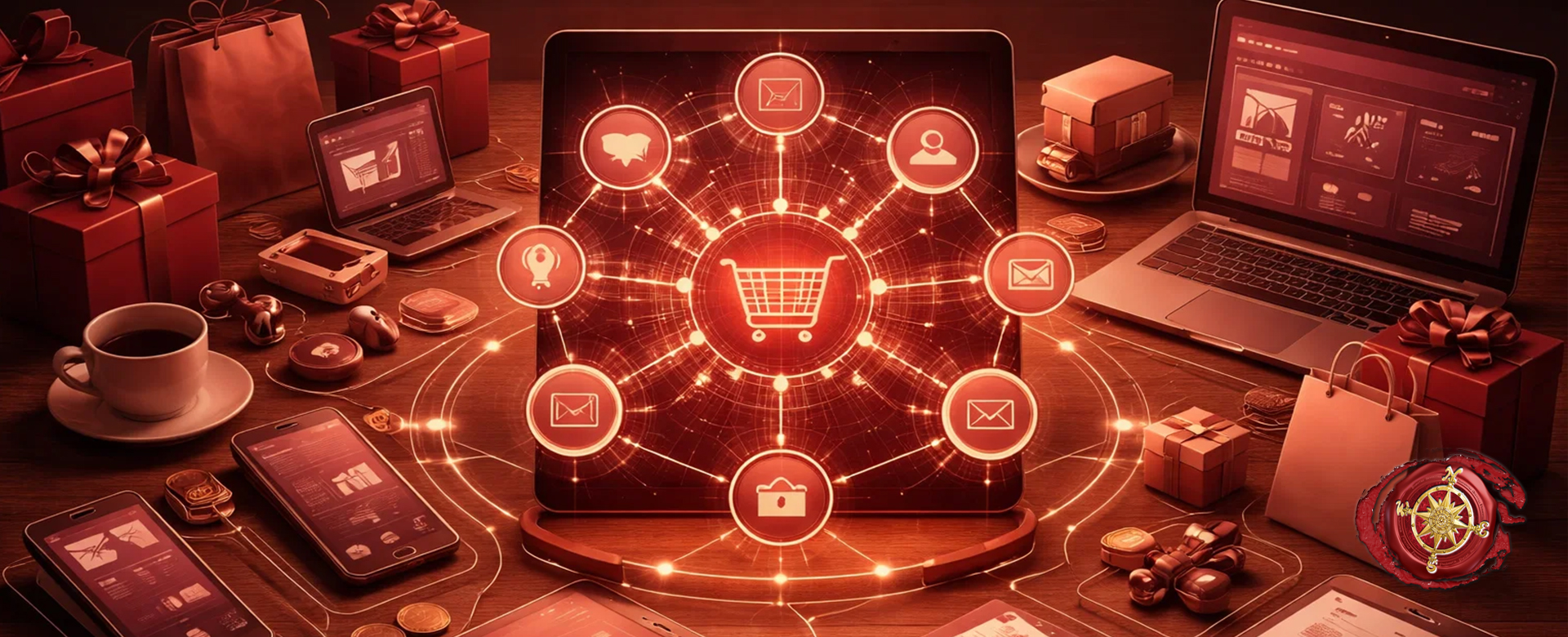
Core Component of Effective Marketing Strategies
Strong Omnichannel Marketing Strategies don’t happen by accident. And they can be accomplished even by the smaller of businesses out there with a concerted, well-planned effort. They’re built on a few essential components that work together behind the scenes. Miss one, and the whole system is on shaky ground.
Data Integration and Customer Profiles
Everything starts with data. Omnichannel marketing relies on unified customer profiles that combine behavioral, transactional, and demographic information. This means pulling data from websites, email platforms, CRM systems, social media, and offline interactions into a single source of truth.
When data is integrated properly, brands can:
-
Personalize messaging accurately
-
Trigger campaigns based on real behavior
-
Understand where customers drop off
-
Measure true customer lifetime value
Without integration, personalization becomes guesswork, which was most of what was done before AI’s tech advances. With it, marketing becomes precise and cost-effective for your business.
Implementation Roadmap for Omnichannel Marketing Strategies
Putting Omnichannel Marketing Strategies into place can feel overwhelming. The key is breaking it into manageable steps.
Common Challenges & Future Trends
Other Articles You May Enjoy:


Your Next Steps…
Omnichannel Marketing Strategies aren’t about complexity—they’re about coherence. When brands align their data, messaging, and technology around real customer behavior, marketing becomes more effective and more human. The brands that win aren’t the loudest. They’re the most connected, consistent, and customer-focused. Now’s the time to build strategies that actually keep up.
FILL OUT THE FORM BELOW AND REQUEST A CONSULTATION WITH US AT MEDIABUS MARKETING GROUP
OMNICHANNEL MARKETING FAQs
What are Omnichannel Marketing Strategies?
Omnichannel Marketing Strategies create seamless customer experiences across all channels by connecting data, messaging, and timing into one unified approach.
How are omnichannel and multichannel marketing different?
Multichannel uses multiple platforms independently. Omnichannel integrates those platforms so they work together as one experience.
Do small businesses need omnichannel marketing?
Yes. Even simple omnichannel setups—like connecting email and website behavior—can significantly improve results.
What tools are required for omnichannel marketing?
Common tools include CRMs, CDPs, marketing automation platforms, and analytics solutions.
Is omnichannel marketing expensive?
It can be scaled. Start with core channels and expand as ROI becomes clear.
How do you measure omnichannel success?
Success is measured through engagement, conversion rates, retention, and overall customer lifetime value across channels.